When More Knowledge isn’t the Answer
Surrendering to the quiet 5am insights
I woke up this morning with back and leg pain. To be honest, I do not typically wake up in pain. I am a heavy sleeper, so the discomfort caught my attention immediately.
I knew exactly where it came from. The day before, I had walked vigorously on a treadmill for an hour and skipped stretching, something I knew better than to do. The cause of my agitation was clear. As I shifted and stretched my leg, searching for relief, something else tugged at me. Briefly, I felt that familiar surge of early-morning clarity, that quiet 5am energy that insists something needs to be written down.
I reached for my phone, and before I could grab it, the words were already on my lips.
The solution isn’t the answer. It’s in the surrender.
I wrote it down, rolled over, and fell back asleep until 9am. That part was peculiar too. I normally wake around 7:30, even without an alarm. I overshot it by a long stretch. It occurred to me later that surrender, in that moment, was not just metaphysical. It was physical. My body needed rest, and instead of fighting it, I yielded.
‘Letting go’, in the Age of Knowledge
We live in an age obsessed with answers. Knowledge, explanations, frameworks, closure. If we do not get the closure we think we need (or deserve), we push harder until we get it. We assume that if we can correctly name the problem, identify its source, and trace its origin, relief will follow.
We do this everywhere in life. Many of us self-diagnose our mental and emotional struggles, becoming amateur therapists and doctors. We understand trauma, attachment styles, patterns, and cycles. We know the language well. And yet, peace still feels elusive. (I think there’s a reason for this, but that’s for another article).
No ‘peace’, because it is not found in the diagnosis.
Mother Teresa once wrote and is often quoted, “We are not called to be successful, but faithful.” That sentence quietly dismantles our fixation on outcomes and refocuses on the journey. Faithfulness does not require answers to problems solved, nor clarity. It requires trust. Answers do not transform us. They merely point us in the right direction. Truthfully, peace is not found in knowing more, but in surrendering more.
Scripture has always been far less interested in explaining life than it has been in forming and transforming the heart. Abraham was not given a destination, only a direction. “Go from your country… to the land I will show you” (Genesis 12:1). This implies an eventual revealing of the destination, and a trusting that the journey will reveal what is needed along the way. The same implication latter shows up when he was told to sacrifice his son Issac. He was faithful, and God provided a ram after seeing Abraham’s trust in Him.
The solution isn’t the answer. It’s in the surrender.
Simon Peter was not handed a strategy, despite how often he tried to create one. He was given an invitation. Jesus took his identity as a fisherman and called him into something entirely new with two simple words: “Follow me.” Jesus knew exactly where that path would lead, even if Peter did not.
The truth is, If Jesus had laid out all the details, the suffering, the cost, the cross, I am fairly certain most of us would reject the plan outright. Instead, He calls us to take up our cross and follow Him, trusting that the journey will reveal what we need along the way.
There is a phrase Christians often repeat that I believe misses the mark. “God will not give you more than you can handle.” While the sentiment suggests strength and capability, the reality is that God often gives us more than we can handle, because we were never meant to handle it alone.
We were created for dependence. On Him. On one another.
God allows what we cannot carry so that we might draw nearer to Him, not further into ourselves.The apostle Paul also pleaded for a thorn to be removed from his side. What the scripture doesn’t lay out, is exactly what that thorn was. But the crux of the lesson is that we all have thorns in our “sides” at some point in life, and it’s in Jesus that we are to place our trust. It’s His Grace, that is sufficient for us. (2 Corinthians 12:9). Something I’ve become vastly aware of in this season of life.
In each of these stories, Abraham… Peter… Paul, the breakthrough does not come through knowledge or understanding. It comes through trust and reliance on God. Through yielding. Through surrendering to God’s goodness, His timing, and His plan.
Our modern struggle with surrender is that we often mistake it for passivity or defeat. We fear that surrendering our will means losing control, losing ground, or allowing others, even adversaries, to gain the upper hand. In reality, surrender is the most honest response to our limits. It is the moment we stop demanding that God operate on our terms. We pray fervently for outcomes we want, yet often forget to pray the words Jesus taught us: that God’s will would be done on earth as it is in heaven.
A Reason for Prayer
If you have spent time around me, you have probably heard me say this before: Prayer does not change God’s mind; it changes our hearts. It is not a magic eight ball. It is not leverage or convince God to do anything. Prayer is designed to change us.
Richard Rohr puts it plainly: “We do not think ourselves into new ways of living, we live ourselves into new ways of thinking.” That truth is uncomfortable for a culture that worships self and control.
We deceive ourselves if we think we can out-argue, out-reason, or persuade the all-knowing, all-powerful God of the universe. Prayer realigns our hearts with His will and reshapes how we act within it.
When we pray about a need, something should shift in us. Either we are moved to act, or we are connected to someone who can. This is part of what it means to belong to the Body of Christ. We become conduits for awareness, compassion, and response, much like pain signals in the body that tell us when to stop, rest, or change direction.
This is why answers alone fail us. They promise control, but only deliver information. They satisfy the intellect while leaving the soul untouched.
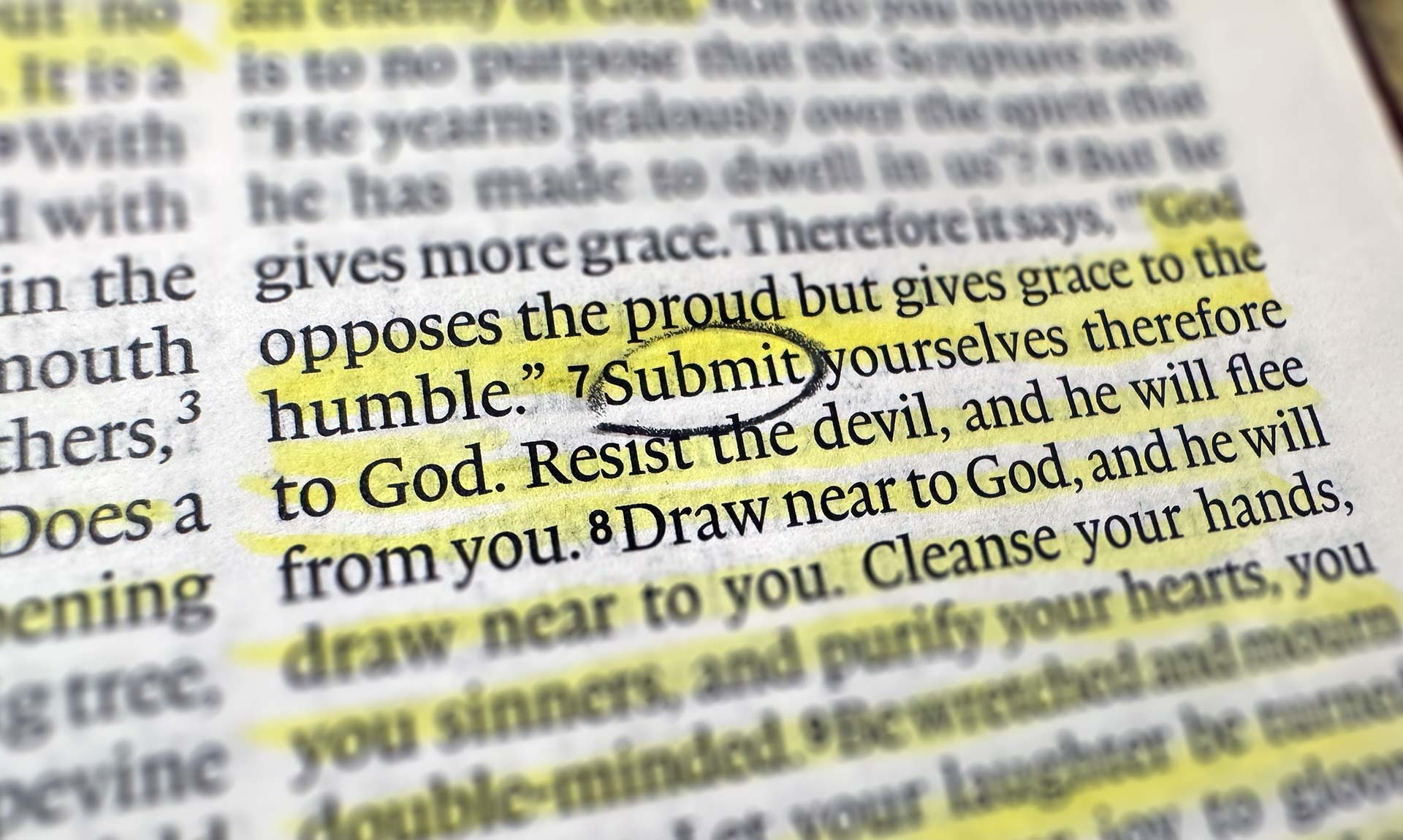
Surrender feels risky because it removes our leverage. It asks us to say, “I do not need to know yet,” and “I will trust before I understand.”
Jesus never promised clarity to His disciples. He promised peace. “Peace I leave with you; my peace I give you. I do not give to you as the world gives.” (John 14:27)
The world demands answers and knowledge for the purpose of stability and certainty. Perhaps that is why we have created AI and systems to solve every riddle for us. We believe that if we could just know everything, we would finally be at rest, living comfortable lives. But knowledge without surrender leaves us hollow.
God does not give us all the answers. He gives us Himself. Jesus. And for all intents and purposes, a homeless man who healed and gave hope to the hopeless. And to die for our sins.
We often pray for solutions when what we truly need is release. Release from control. Release from self-sufficiency. Release from the belief that we were meant to carry the weight of our lives alone.
Eugene Peterson once observed, “Faith is not a generalized religious feeling. It is a decision to trust God in the details of ordinary life.” Surrender is where that decision becomes real.
The solution was never the answer. It has always been in the surrender.
Share This Article with Your Network
About the Author: Ryhan Resleff





news via inbox
Want regular updates and new articles from Resonate? Sign up for our free email updates—secure, private, and delivered straight to your inbox.