Prioritizing Identity Before Labels
We live in a world that is very quick to name things, especially people.
Diagnoses, categories, profiles, acronyms, pronouns. A world full of categorizing for convenience, quickly identifying and stereotyping others for helping determine and optimize the value others carry for us. We’ve taken our job of naming animals beyond the Garden, in ways that help us make sense of the world around us. Some of these labels are clinically useful, even medically necessary. But somewhere along the way, a dangerous shift often happens:
Labels stop describing challenges and start defining identity.
I was reminded of this recently when my son told me he could not do something “because he has ADHD.” A moment later, he said quietly, “I just wish I was a normal person.” That sentence stopped me cold.
This is where well-meaning systems can unintentionally wound the soul.
When Description Becomes Definition
A diagnosis is meant to describe patterns of behavior or capacity. It is not meant to declare who a child is, what they are capable of becoming, or the limits of their future. Yet children are incredibly perceptive. They listen not only to what adults say, but also to what adults imply.
When a child repeatedly hears that their struggles are rooted in something fixed, it is easy for effort to give way to resignation. “This is just how I am” quietly replaces “I am still learning.”
Their “capacity” becomes their destiny.
That is the line I refuse to let my child cross.
I told him the truth: he can do the thing he was doubting. It may take longer. It may require different tools. It may involve more frustration along the way. But difficulty is not the same thing as impossibility.
Then I told him something else that matters just as much: he is normal. And quite frankly, I never want to hear the doubting words ever again.
When a child repeatedly hears that their struggles are rooted in something fixed, it is easy for effort to give way to resignation. “This is just how I am” quietly replaces “I am still learning.” Capacity becomes destiny.
Normal Is Not Uniform
Somewhere along the way, we began to treat “normal” as meaning uniform, effortless, or highly efficient. But real humanity has never worked that way. Every person carries a unique mix of strengths and vulnerabilities.
To combat how the world functions, I tell my son that some of the ways his mind works are like superpowers. He sees connections others miss. He brings energy and creativity into rooms that would otherwise feel flat. At the same time, those same strengths can come with limits. What gives power can also require much care.
Every strength has a cost. Every gift requires stewardship. The goal is not to erase difference, but to understand it.
Medication as a Tool, Not a Substitute
This is where conversations about medication become especially important. Medication can be a gift. It can lower the volume on chaos, create space for learning, and support a child while they develop skills they do not yet have.
But medication should merely support growth, not replace it.
Regulation is something a child learns over time. Patience, emotional awareness, self-control, and perseverance are formed through guided struggle, not instant calm. If behavior is always subdued from the outside, a child never learns how to participate in their own regulation.
Guarding the Interior Life
Growth is inefficient. Formation is messy. That messiness is not failure. It is the classroom of life.
As a parent, my deeper concern is not whether my child is quieter, easier, or more compliant. It is whether he is learning to see himself as capable, whole, and becoming.
We live in a culture that hands out identities quickly and expects people to live inside them indefinitely. Faith tells a different story. Before performance, before diagnosis, before limitation, a person is known and loved. Identity is received before it is managed.
Identity Is Received, Not Achieved
This truth is not new. It is woven into the very foundation of the Biblical-Christian story.
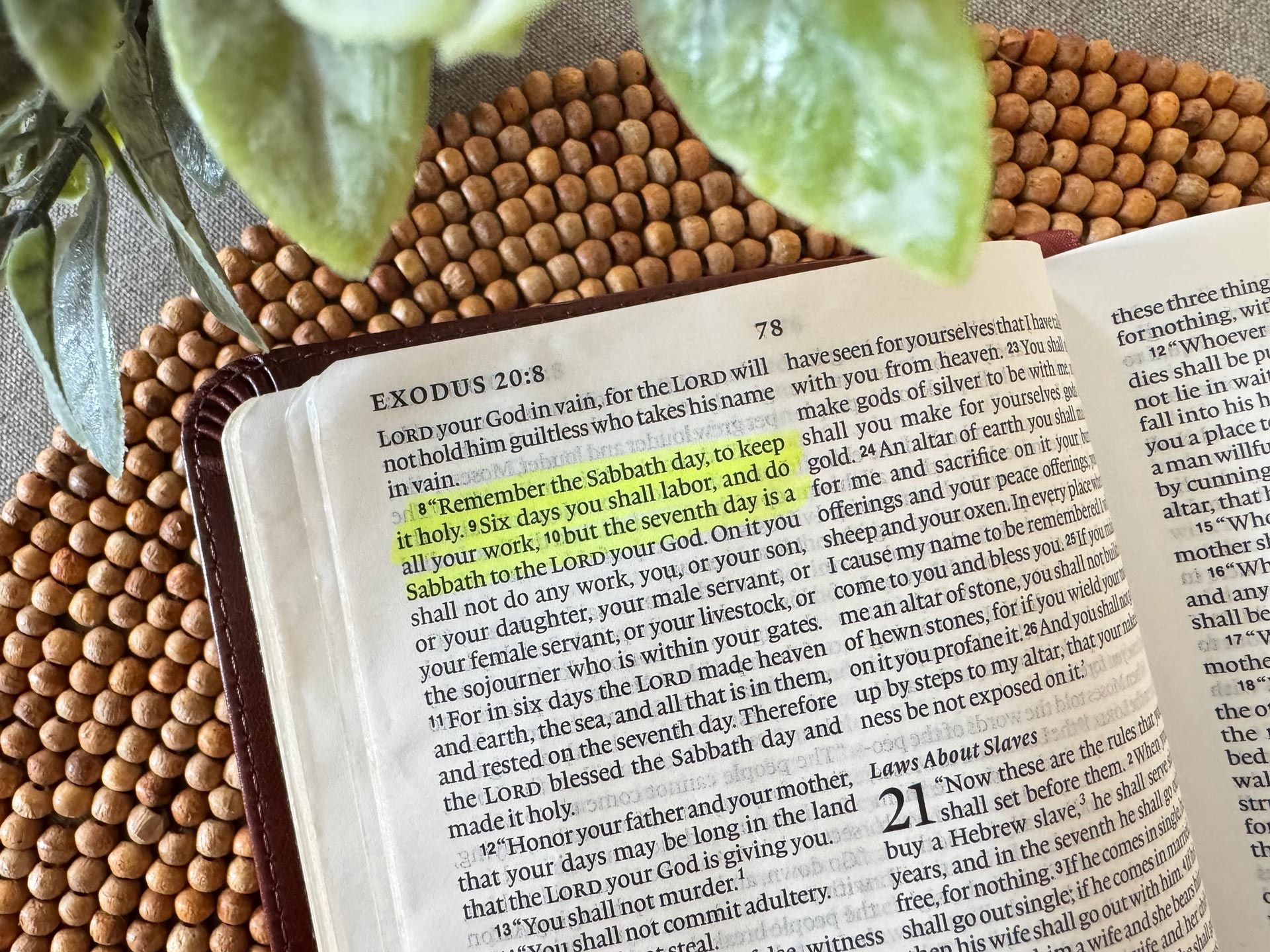
At the baptism of Jesus, before a miracle was ever performed, before a sermon was preached, before his ministry was launched, the Father spoke identity over the Son: “This is my beloved Son, with whom I am well pleased.” Identity was given before activity. Acceptance preceded obedience. ‘Being’ came before doing.
That order matters.
When identity is tethered to performance, comparison, or productivity, it becomes fragile. It must constantly be defended, proven, or controlled. But when identity is received rather than achieved, it becomes secure. It can withstand testing. It does not collapse under difficulty or delay.
This is why the voices we allow to name us matter so deeply.
For something to name us truthfully, it must pass 3 tests:
Choosing Formation Over Control
There is always pressure to choose efficiency over formation, certainty over discernment, control over patience. But children do not need to be managed into adulthood. They need to be formed.
That formation happens when we hold space for growth instead of collapsing complexity into labels. It happens when tools remain tools, not identities. It happens when we remind our children that who they are is bigger than the challenges they face.
Identity comes first. Everything else must serve that truth, not replace it.
Resonate Hope, January 12th, 2026
Share This Article with Your Network
About the Author: Ryhan Resleff




news via inbox
Want regular updates and new articles from Resonate? Sign up for our free email updates—secure, private, and delivered straight to your inbox.