When Every Hobby Becomes a Brand
Reclaiming Identity in an Age That Wants to Monetize Everything, including your Rest and Sleeping Hours
Spend ten minutes scrolling through social media and you will encounter an astonishing display of human capability: A carpenter demonstrates flawless restoration and woodwork. A photographer captures a sunrise that seems almost unreal. An artist painter has mastered the art of swinging paint from a rope to make circular art. A pastor explains a difficult passage of Scripture in sixty seconds. A gardener harvests vegetables from a backyard oasis. A software engineer builds an application in public. A husband and wife have turned their quick wit and playful banter into an entertaining online presence. A musician records an original composition. An artist transforms thrift store junk into immaculate works of art, tiny treasures. A college student converts a worn-out cargo van into a surprisingly comfortable home on wheels.
There is something genuinely beautiful about this. Never before have ordinary people been able to share their knowledge, creativity, and passions with such ease. Much of what fills our reels, #fyp, and #iykyk pages represents real skill, real generosity, and years of quiet dedication. The internet has become the largest repository of freely shared human knowledge in history.
Yet after enough scrolling, another thought quietly emerges.
Why can’t I become that good?
It rarely arrives all at once. Instead, it takes shape through a hundred small comparisons. Someone else’s woodworking looks effortless. Another person’s photography feels unattainable. A creator your own age has built a thriving business around a hobby you only recently discovered. Before long, admiration quietly gives way to comparison, and comparison gives way to self-doubt.
Then another question follows close behind.
What am I supposed to become?
The question is rarely spoken aloud, but it lingers beneath the surface of modern life. We no longer consume other people’s work. We increasingly compare our lives against it, wondering whether we, too, should transform our interests into a platform, our personality into a brand, and our hobbies into content. The pressure is subtle enough that many people never recognize it, yet powerful enough to reshape how they think about work, leisure, identity, and even their relationship with God.


The modern world has made an extraordinary promise:
Anyone can become anything.
Never before have ordinary people possessed such unprecedented freedom to learn new skills, publish their ideas, start businesses, or cultivate communities around shared interests. A teenager with a smartphone can reach more people in a single afternoon than many authors reached in an entire lifetime only a century ago. A craftsman working from a garage can teach thousands of aspiring woodworkers. A homemaker can build a thriving business by sharing recipes, parenting- and bio-hacks. An amateur historian can spark a renewed interest in forgotten civilizations. Knowledge is abundant, opportunity is accessible, and barriers to entry have never been lower.
By almost every measurable standard, this should be a cultural triumph.
Yet beneath these opportunities lies a quieter reality. Many people report feeling increasingly anxious about who they are, where they belong, and whether their lives are meaningful. They scroll through endless examples of individuals who appear to have found both purpose and audience while wondering why their own lives feel comparatively undefined or underwhelming. The contradiction is difficult to ignore. We live in an age that celebrates individuality more than any civilization before it, yet many individuals struggle to know who they are apart from the expectations of others.
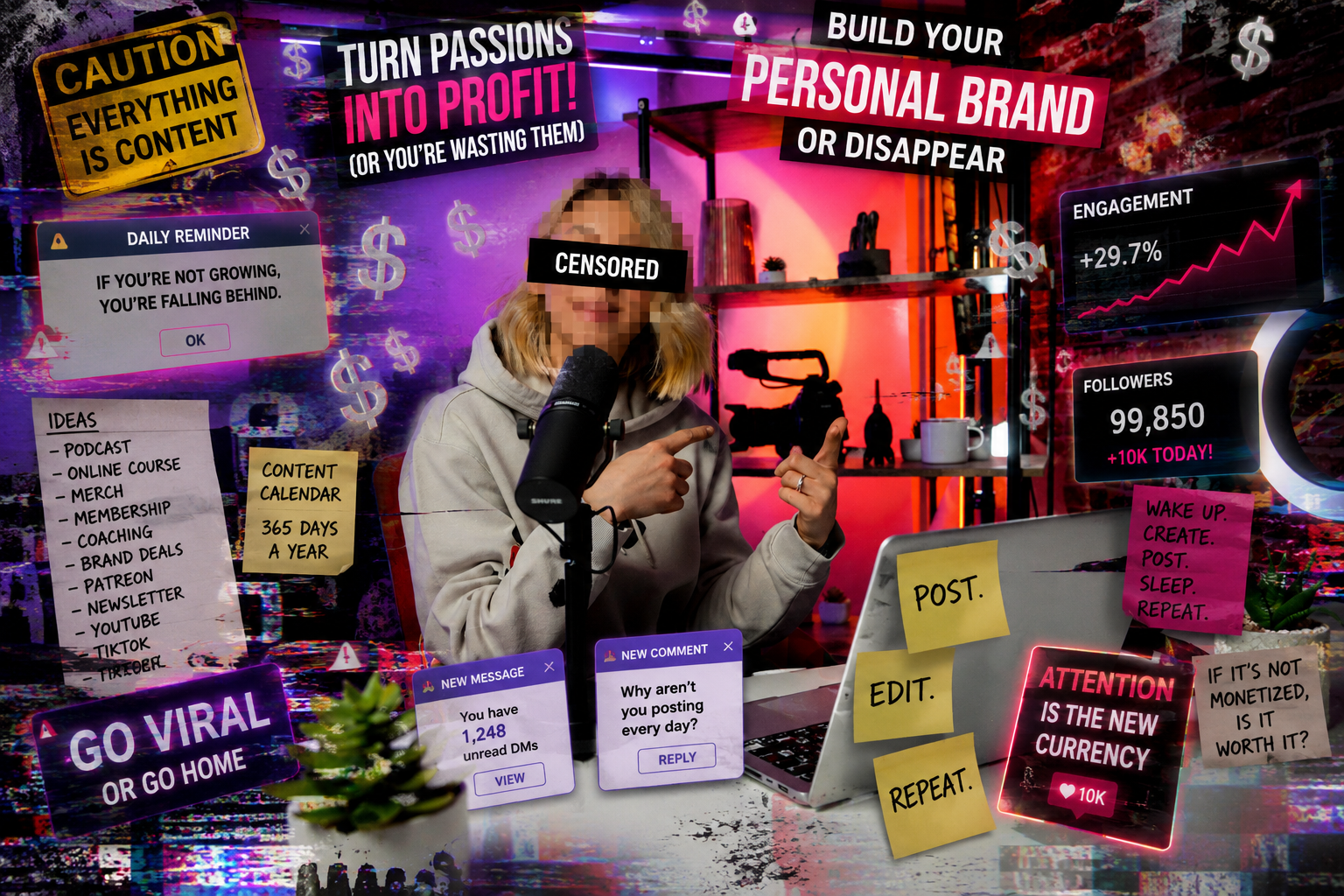
This tension reveals something important about ourselves. The problem is not simply that social media exists, nor that people create content or build businesses around their passions. The problem is more subtle and nuanced. Somewhere along the way, identity became inseparable from visibility. We increasingly assume that what is valuable should be shared, what is shared should attract attention, and what attracts attention should eventually generate income. The result is a culture in which even our leisure is quietly evaluated according to its “market potential”.
The consequences extend far beyond influencers and/or entrepreneurs. They shape how ordinary people think about hobbies, careers, friendships, and even faith. Activities once pursued for their own sake are now measured against an unspoken question: Could this become something more?
It is an understandable question for anyone looking for purpose in this busy world to ask. One that deserves closer examination.
God never intended your identity to be built on your productivity. Your work is an expression of who you are, not the source of your worth.
When Everything Becomes Potential
The question, Could this become something more?, appears harmless on the surface. In many respects, it reflects admirable qualities. It is the question of an entrepreneur looking for opportunity, an artist hoping to share their work, or a parent seeking to provide a better future for their family. Ambition, stewardship, and creativity are not only valuable but deeply biblical concepts when rightly ordered.
The problem is not that we ask the question. The problem is that we rarely stop asking it, allowing our ambitions to slowly become idols.
Modern culture has become remarkably efficient at identifying unrealized potential. A hobby is no longer simply a hobby. To an entrepreneur, it is the “early stage of a business”. A collection of photographs is not merely a personal archive… it is a portfolio waiting to be published. An afternoon spent baking bread can become a cookbook, a YouTube channel, or a lifestyle brand, or even a local bread stand (I have no problem enjoying a good loaf from time to time). Even a walk through the woods is quietly accompanied by the thought that it might make a beautiful reel or Instagram post.
This subtle shift reaches far beyond our hobbies. Attend a concert, a theatrical performance, or even a child’s school recital, and you don’t have to look far to find dozens of phones raised in the air. Many people are so intent on preserving the moment that they inadvertently stop participating in the moment itself. We have become increasingly concerned with documenting our experiences, sometimes at the expense of fully experiencing them.
To be clear, there is nothing inherently wrong with taking photographs or recording meaningful memories. The concern is not the camera itself, but the instinct behind it. When our first impulse is to ask, Should I capture this? instead of How can I be present here?, something in us has quietly changed. The experience is no longer enough on its own. It begins to feel incomplete until it has been shared, archived, or validated by someone else.
Yet every technological innovation carries with it an unintended philosophy. Social media did not simply give us new tools for communication. It subtly changed the lens through which we evaluate our experiences. Instead of asking whether an activity is enjoyable, meaningful, or personally enriching, we increasingly ask whether it is shareable, scalable, or profitable. Without realizing it, we begin assigning value to experiences according to their public potential rather than their intrinsic worth.
This shift is easy to overlook because it rarely announces itself. It emerges gradually through thousands of ordinary decisions. We photograph our meals before tasting them. We interrupt meaningful moments to capture them for later viewing, even though most of those videos will never be watched again. (If you’ve ever gone back and rewatched an entire fireworks show you recorded on your phone, let me know. I suspect most of us haven’t.) We begin to feel guilty for spending time on activities that produce neither income nor content. Slowly, the metrics of the digital marketplace become the metrics by which we evaluate our own lives, our success, and even our sense of purpose, worth, and identity.
It is not that we intentionally choose this way of thinking. Rather, it is absorbed through repetition. Every view, like, share, follower, and dollar subtly reinforces the idea that value is something to be measured, displayed, and optimized. Over time, we begin to judge ourselves by the same standards, often without realizing we have adopted them.
The result is a subtle but profound inversion. Leisure begins to resemble work. Curiosity becomes strategy. Rest becomes optimization. Even creativity, once valued as an expression of wonder, is increasingly judged by its ability to generate engagement.
Perhaps this explains why so many people feel exhausted despite having unprecedented freedom. The burden is no longer simply to earn a living. Increasingly, it is to justify every interest, every talent, and every spare hour by demonstrating that it can become something larger than itself.
The Evidence We Cannot Ignore
If these observations were merely anecdotal, they would be easy to dismiss. Perhaps this is simply the perspective of someone who has spent too much time online. Yet the broader trends suggest something more significant is taking place.
According to DataReportal’s 2025 Global Overview, the typical internet user spends 2 hours and 21 minutes every day on social media. That amounts to more than 850 hours each year, or roughly 35 full days spent using social platforms.
Time alone, however, tells only part of the story. We live in a culture that increasingly encourages everyone to become a creator, even though meaningful financial success remains concentrated among a relatively small percentage. The creator economy has reshaped cultural expectations in ways that are difficult to quantify.
The dream of becoming a full-time creator is far more visible than its reality. CreatorIQ’s 2026 State of Creator Compensation report, which analyzed creator payments across its platform, and it was independently reported by outlets like Business Insider and The Wrap. The report’s key findings were:
- The top 10% of creators received 62% of all payment volume in 2025
- The top 1% received 21% of all payments
- The average creator earned about $11,400 (mean), but the median creator earned only about $3,000, showing that a relatively small number of very successful creators pull the average upward.
For reference, $3,000/year is about the same outrageous cost as a cup of coffee from a local coffee shop, per day.
Millions of people now earn income by teaching skills, documenting their lives, entertaining audiences, or sharing specialized knowledge. For many, this has opened doors that would have been unimaginable a generation ago. A gifted woodworker no longer depends on a local customer base. A photographer or painter can find clients across the country. A pastor can teach people halfway around the world. The internet has removed many of the traditional barriers between creators and audiences.
Yet the same system that creates opportunity also creates comparison.
For every creator who finds success, thousands of others quietly wonder whether they, too, should be building an audience. The question is no longer reserved for entrepreneurs or artists. It has become surprisingly common among ordinary people. Should I start a YouTube channel? Should I document my fitness journey? Could this hobby become a business? Am I wasting my potential by keeping this to myself?
Perhaps the most remarkable shift is not that people ask these questions. It is that they often feel guilty when the answer is no.
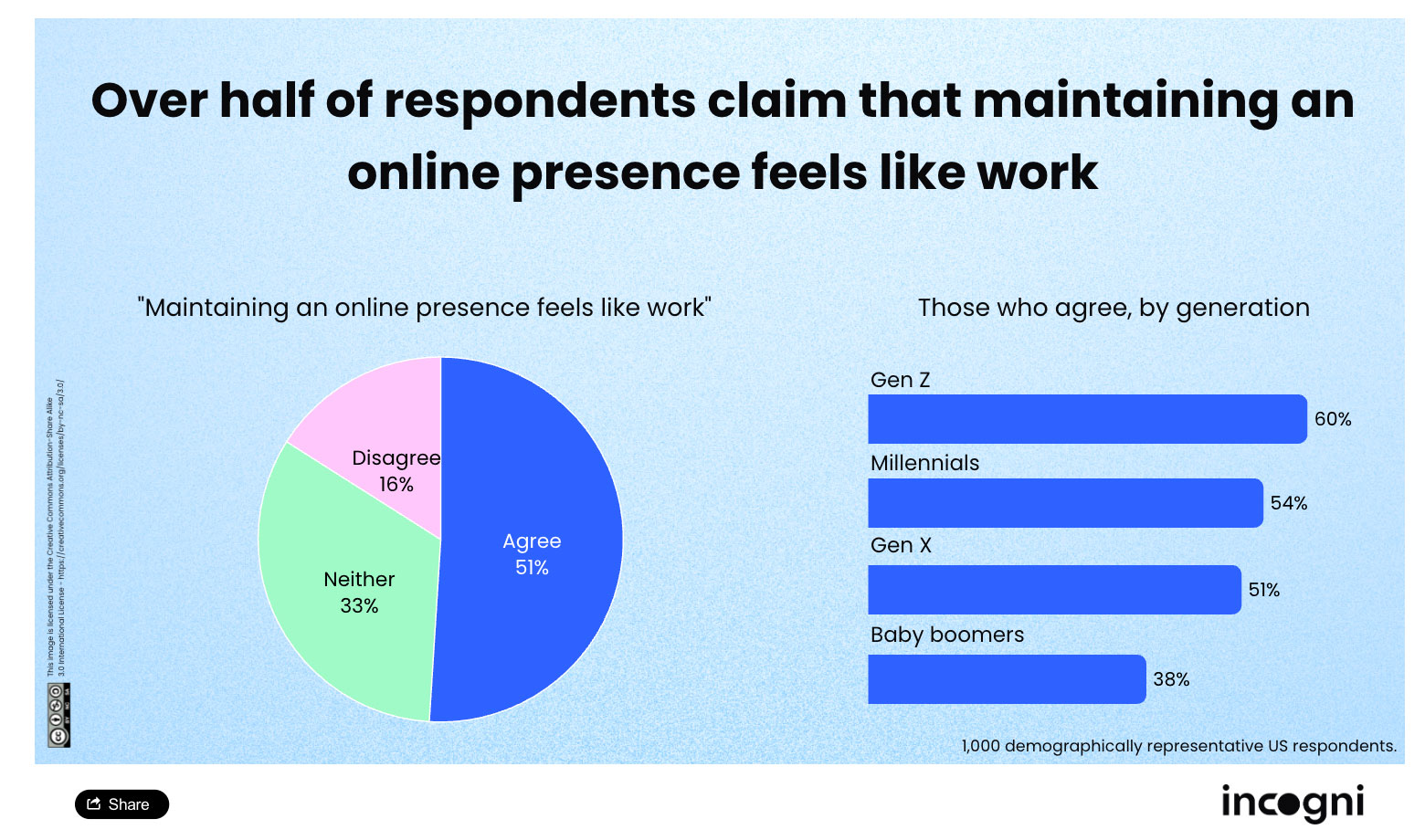
Perhaps this explains another trend. New research suggests that many people are posting less than they did only a few years ago. More than half of users report sharing less frequently, while many have deleted social media applications because of stress, anxiety, or the feeling that maintaining an online presence had become exhausting.
Taken together, these observations point toward a deeper issue. The greatest cost of social media may not be the hours it consumes, but the questions it teaches us to ask. We begin measuring our interests by their audience, our talents by their marketability, and our experiences by whether they are worth sharing. Slowly, almost imperceptibly, the value of an ordinary life becomes harder to recognize unless someone else is watching.
A Different Way of Being Human
If modern culture subtly teaches us that our value is discovered through visibility, Scripture tells a remarkably different story.
The opening chapters of Genesis establish an order that is easy to overlook but impossible to overstate. Humanity is created in the image of God before a single task is performed. Adam does not cultivate the garden in order to become valuable. He cultivates it because he already is. His work is an expression of an identity he has received, not an attempt to earn one.
This pattern appears throughout Scripture. God consistently defines people by His relationship with them before He defines them by their accomplishments. Israel is called God’s people before inheriting the Promised Land. The disciples are called by Jesus before they understand their mission. Believers are described as sons and daughters before they are instructed how to live. Identity precedes vocation.
Modern culture quietly reverses this order. We are encouraged to discover who we are by building something others will recognize. Careers become identities. Hobbies become brands. Platforms become measures of influence. The line between what we do and who we are grows increasingly difficult to distinguish.
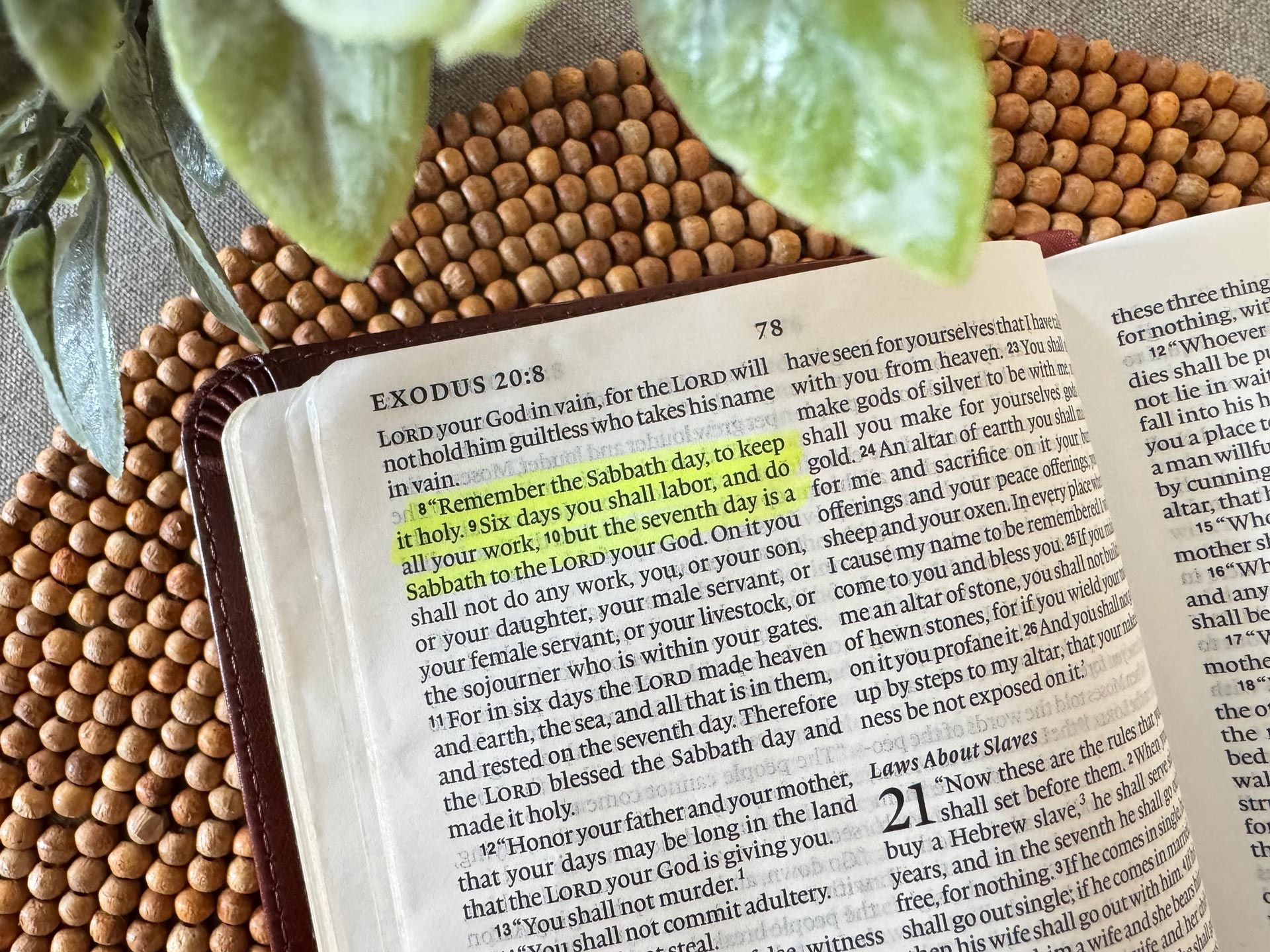
Perhaps this explains why so many people feel anxious whenever their work slows down. If productivity becomes the foundation of identity, then rest begins to feel dangerous. Silence feels unproductive. Hiddenness feels like failure. A day spent accomplishing nothing measurable can produce guilt rather than peace. Ironically, perhaps, this might be one of the reasons the modern Christian avoids a weekly Sabbath?
Scripture offers a radically different vision: Human worth does not fluctuate with output because it was never rooted in output to begin with. The Christian faith does not reject work, ambition, or excellence. In fact, it encourages all three. What it rejects is the belief that our labor establishes our value, and this distinction changes everything.

Conclusion: Recovering What Matters
If there is one lesson to take away from this discussion, it is that technology itself is not the enemy. The internet has connected people, opened doors, created careers, and made knowledge more accessible than any generation before us could have imagined. The problem is not that these tools exist. The problem is that they quietly shape the questions we ask about ourselves.
When every hobby carries the possibility of becoming a business, every interest a brand, and every moment a piece of content, it becomes increasingly difficult to remember that some of life’s greatest treasures were never meant to be monetized. They were meant to be enjoyed.
As followers of Christ, we are invited into a different way of living. One that measures life not by visibility, productivity, or influence, but by faithfulness.
As you reflect on your own life, consider these questions:
The modern world will continue inviting us to become brands, personalities, and products. The gospel extends a different invitation. It calls us to become whole people, secure in an identity that cannot be earned, purchased, or measured by an algorithm. Perhaps the most countercultural act in our age is not to disappear from the world, but to refuse to let the world determine what makes a life worth living.
Share This Article with Your Network
About the Author: Ryhan Resleff





news via inbox
Want regular updates and new articles from Resonate? Sign up for our free email updates—secure, private, and delivered straight to your inbox.