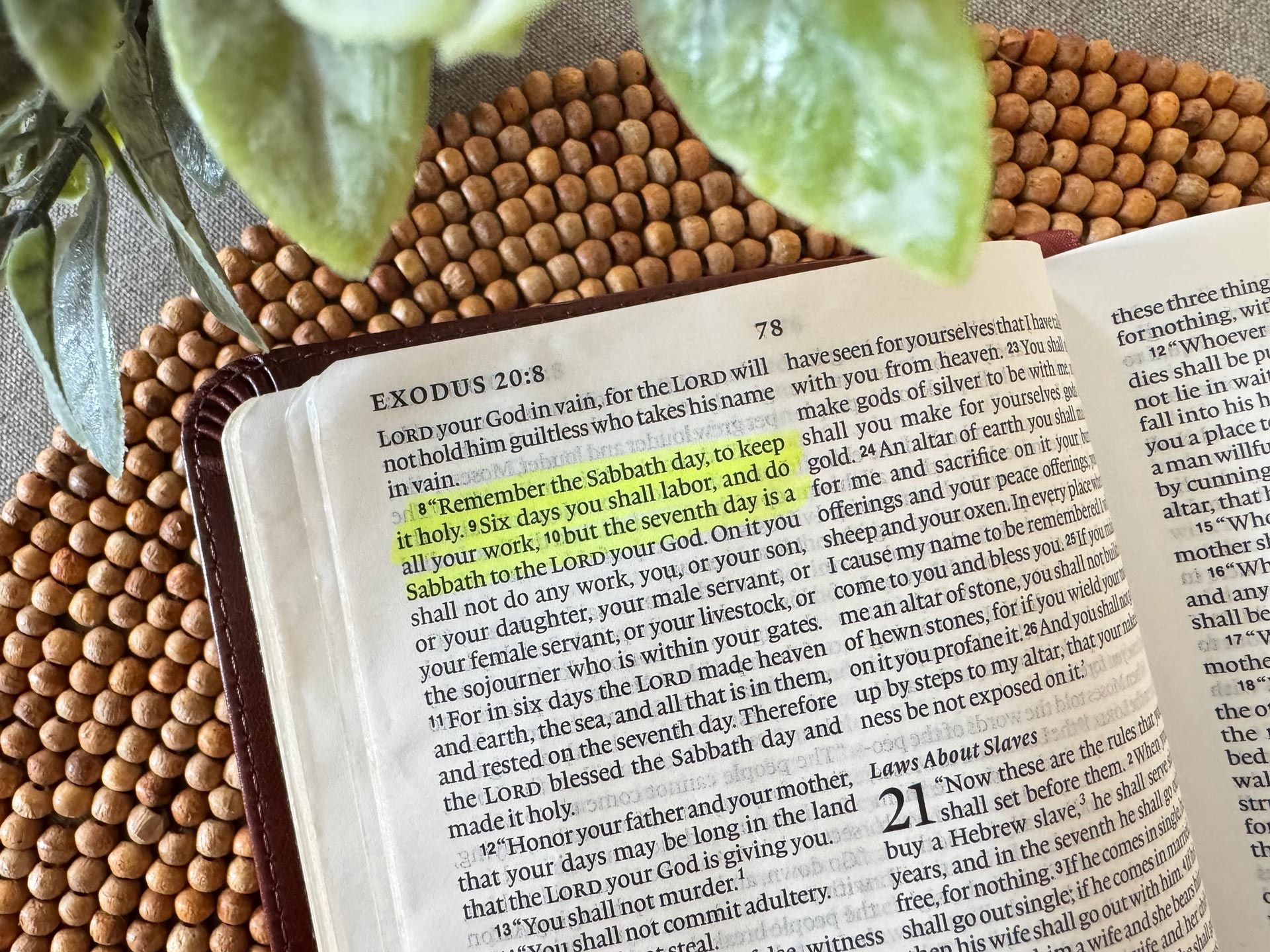
Sabbath for Christians: Reclaiming Rest in a World That Won’t Stop
Over centuries, Christians have struggled with what it means to observe Sabbath. Today, most of us have lost its true meaning and replaced it with our own definitions.
When I tell people I observe the Sabbath, questions come fast:
“Wait… do you have Jewish roots?”
“If you practice Sabbath, why are you here at the food pantry, working? Isn’t that against Sabbath?”
Or even blatantly ignorant, “Don’t you know that Jesus did away with Sabbath?” (yes, even still… these questions baffle me).
These reactions aren’t just naïve or dense. They are the product of generations of confusion, misinterpretation, and cultural shifts that have slowly displaced the original purpose of Sabbath.
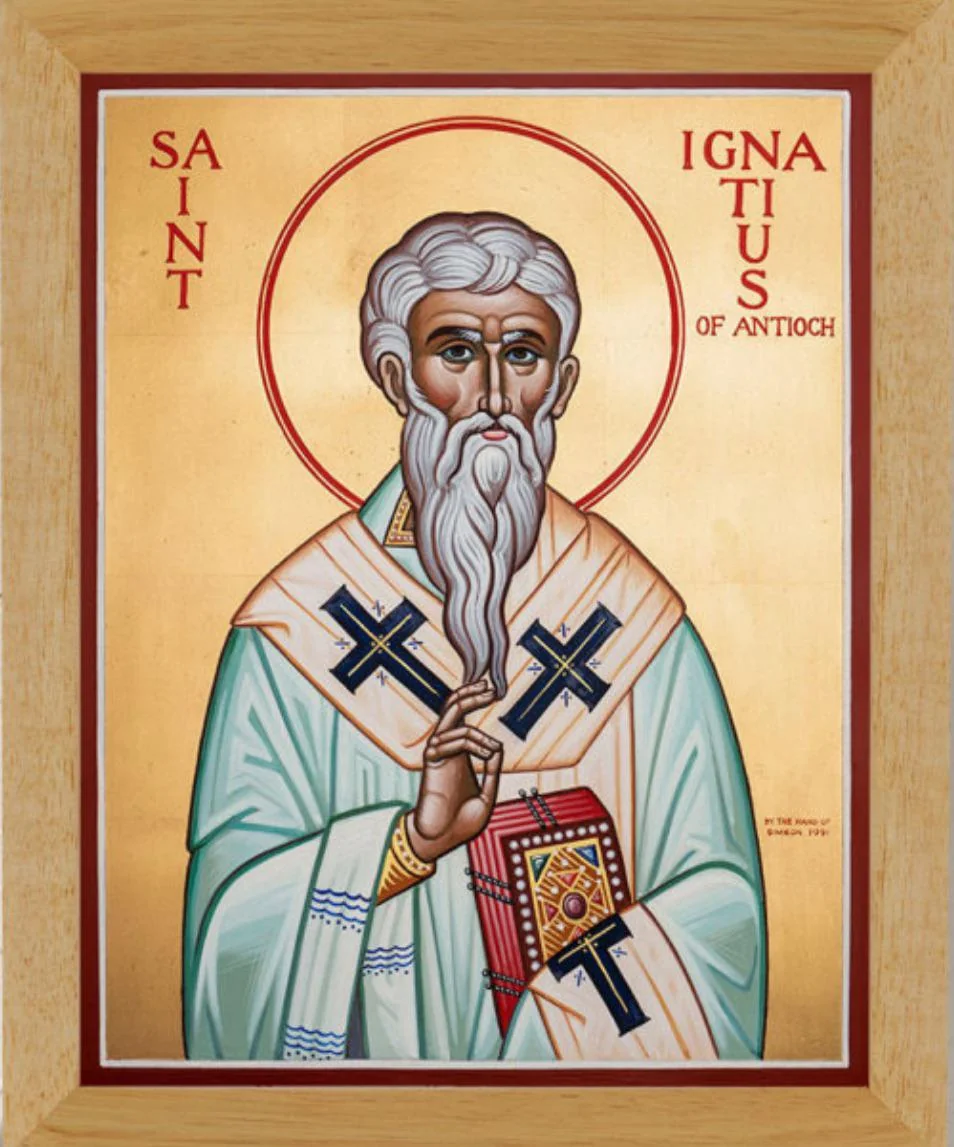
The early church wrestled with how to honor the pattern God set at creation while recognizing the resurrection of Jesus. Church fathers like Ignatius of Antioch urged believers to “no longer live according to the Sabbath” but to live according to the Lord’s Day (the day being Sunday as His Resurrection). Justin Martyr, writing in the mid-second century, described Sunday worship as a remembrance of both creation and resurrection. Tertullian and Origen viewed Sabbath typologically, pointing to eternal rest in Christ. Essentially, many began to believe Sabbath was no longer necessary because Christ had fulfilled it.
Sunday gradually became the new day of sacred assembly, though not immediately a day of rest. In 321 CE, Emperor Constantine issued a civil decree mandating Sunday as a day of rest: workshops were closed, government officials rested, and the cadence of life was aligned (forced) with worship. The Council of Laodicea in 363–364 CE forbade Christians from “Judaizing” by resting on Saturday. The Sabbath, once a gift of liberation and trust, had been recast as civic law, which resulted in a disconnection from its intended spiritual purpose.
Even after Martin Luther and the Reformation pushed back against oppressive religious structures, laws enforcing Sunday rest persisted in parts of Europe and colonial America. New England states prohibited commerce, sports, and leisure on Sundays. Only by the 1970s and ’80s did Western society fully reclaim freedom from these enforced structures, leaving modern Christians confused about slowing down.
No wonder Sabbath feels foreign. Its gift—rest, trust, and alignment with God—has been buried under layers of cultural, legal, and religious accumulation. No wonder the questions about its relevance in today’s culture still feel “off”. We’ve buried it’s purpose under digital distraction and consumption, shopping and spending habits, and years of exhaustion.
Sabbath Is Not About Ethnicity or Obligation
Ironically—though its Jewish history—Sabbath did not begin with Israel. It begins at Creation. God finished His work and rested—not because He needed to, not to withdraw His Power, but to establish a rhythm and model for humanity to follow. Work alone was never the point. Trust, completion, and presence—dependence on God as provider—were.
The Jewish Sabbath commemorated liberation from slavery in Egypt, leading to a sense of identity for them. Yet for many Western Christians, it has been misunderstood as optional, irrelevant, or even burdensome. Some argue that Jesus abolished Sabbath observance when he taught Pharisees that it was made for man, not man for Sabbath. They frame the new covenant as freedom from legalistic restriction, while still missing the point of Jesus’ teachings about the Sabbath.
Jesus did not abolish Sabbath; He restored it… he corrected the version that had already begun to drift. Healing on the Sabbath, feeding His disciples, walking in the fields—these acts were corrections, not eliminations. He was teaching that Sabbath is about the heart, the posture before God, and the trust that our provision comes from Him.
As Abraham Joshua Heschel (a rabbi in the early 20th century) writes in his book The Sabbath:
“The Sabbath is a sanctuary (cathedral) in time. It is not a day for doing nothing; it is a day for being restored, a day for life to catch up with itself.”
Tom Holland (known for his book Dominion: How the Christian Revolution Remade the World) reflects similarly on its universality: Sabbath is not a law for a single (Jewish) people but a way of life intended for ALL humans, free and enslaved, to align with God’s design.
Sabbath in a Modern Context
Modern Christians live in a culture that measures value by output, visibility, and constant motion. Even rest—“power naps” or quick breaks—is framed as a tool to increase efficiency or prepare for the next task. Sabbath disrupts that narrative. I understand why many Christians are confused. We naturally gravitate toward the culture around us rather than intentionally setting ourselves apart. Over time, we’ve bought into the world’s definition of success—wealth, recognition, productivity—and disregarded the design God built for our restoration. Sabbath calls us to step off that treadmill, not as a rule to obey, but as a gift to receive.
If I’m honest, I don’t always get this right. There are weeks where I feel the pull to check my phone, to get ahead, to ‘just finish one more thing.’ But Sabbath calls us to step away from striving—not work itself, but the relentless posture of proving ourselves, of earning, of measuring life by what we accomplish. Sabbath interrupts the illusion that our work is what holds everything together. That it’s the source of our provision, our identity, our security.
John Mark Comer writes extensively in his book Relentless Elimination of Hurry that modern life is “accelerated, anxious, and exhausted.” In this case, Sabbath is not merely a relic from antiquity that should be abandoned; it is an act of defiance against modern western civilization and its economies built on greed and monetary gain. It is a weekly anthemic declaration that we are sustained by God, and not by our productivity or achievements.
Practically Observing Sabbath Today
At my home, observing Sabbath has a rhythm that is simple, joyful, and replicable. Remember, Sabbath is not about perfection—it’s about intention.
We leave the dishes and laundry for other days of the week, not because we won’t work, but because we want to prioritize joy. The table is set with care: immaculate plates, napkins, silverware, and what my son calls “the fancy cups.” I often bake a loaf of bread, eaten warm with butter. We prepare delicious meals and keep our phones and screens shuttered—a kind of modern “tech Sabbath.” We play board games, rest, and enjoy one another’s presence. My son particularly loves a little prayer we say at dinner, where we share “silly things that make us giggle.” It’s a small ritual, but it fills the room with laughter—the kind that makes you forget what day it is.


Saturday is reserved for serving others. We go to the Food Pantry to help those in need. It is work, but not for our own provision. It is work that gives, not demands. It is work I believe Jesus would be proud to claim.
To begin practicing Sabbath in your own life, anchor a window of time—Friday night to Saturday night, or whatever cadence fits your schedule. Then ask yourself: What am I laying down?
Lay down:
Once laid down, then pick up:
Serving, helping, and acting in love does not break Sabbath. It is an expression of it. Sabbath is not passive; it is active trust. It is a labor of letting go.

Jesus and Sabbath: For Us, Not Against Us
Jesus sees Sabbath not as restriction but as freedom. It is life-giving, restorative, and joyfully abundant. Sabbath is a day where we are invited to trust fully: our work, our value, our lives are not defined by output but by God’s provision.
Sabbath invites us to labor to rest—to intentionally release control, to step into the way God sustains us, and to find life where we were trying to manufacture it.
As I’ve mentioned in other articles, Dallas Willard’s observation is still befitting in this context of letting go the need for control:
“The greatest issue in the world today is the challenge of allowing God to be God.”
Sabbath is precisely the invitation for our hearts to let God hold the rhythm of our week while we receive rest, restoration, and presence.
In practicing Sabbath, we reclaim a divine design stolen by culture, distorted by history, and ignored by our busyness. We remember that rest is not absence of action—it is presence of trust. Not merely abstaining from labor, but living as God intended: free, whole, and fully alive.
As Isaiah 58:13–14 reminds us:
“If you keep your feet from breaking the Sabbath
and from doing as you please on my holy day,
if you call the Sabbath a delight
and the Lord’s holy day honorable,
and if you honor it by not going your own way
and not doing as you please or speaking idle words,
then you will find your joy in the Lord,
and I will cause you to ride in triumph on the heights of the land and to feast on the inheritance of your father Jacob.”
For the mouth of the Lord has spoken.
Sabbath is not a burden, a checklist, or a legalistic demand. It is God’s gift—a sacred pattern that reminds us we are not defined by output, profit, or recognition. It is a day to lay down striving, to pick up presence, to labor in letting go so that we may truly rest.
To observe Sabbath is to step into freedom… to trust that God is holding what we usually try to carry.
Share This Article with Your Network
About the Author: Ryhan Resleff





news via inbox
Want regular updates and new articles from Resonate? Sign up for our free email updates—secure, private, and delivered straight to your inbox.