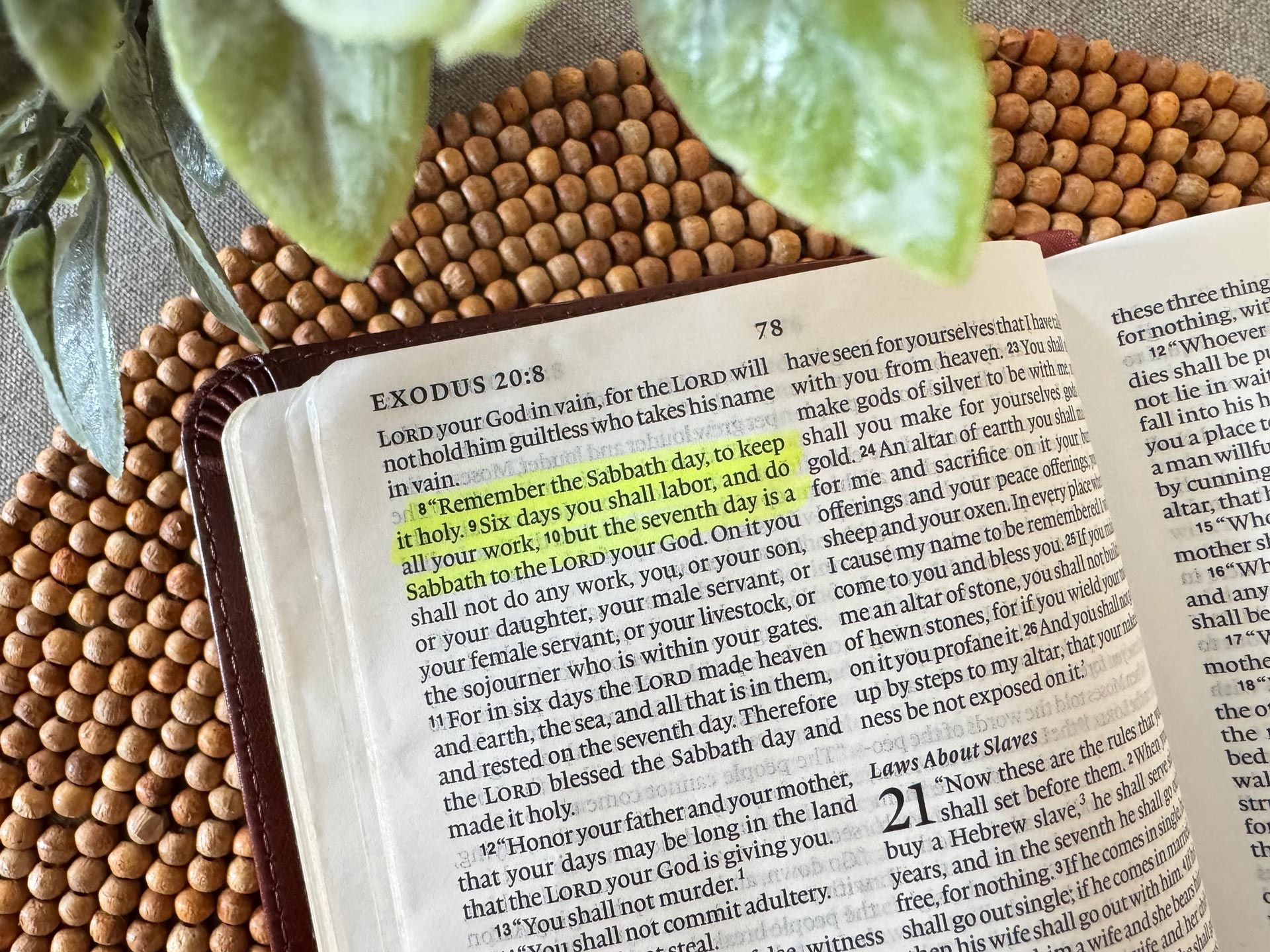
When The Messy Makes Way For The Holy
There’s this quiet tension that most of us sit with.
Feeling the chaos surrounding us, we often assume it keeps us from being present and experiencing God. Our mess and busyness seem like barriers to His closeness. So we convince ourselves that scheduling time with God, putting away our mess, and getting our lives in order will somehow make room for the Almighty. Any time you set aside for God, is good. That said, He longs for something more than just perfection: He longs for your heart. Raw and real.
Before the pandemic, when people used to visit each others’ homes more often, our family would go through cleaning rituals. We made sure the house was picked up, the furniture and blankets arranged perfectly, and all of the personal effects mostly put away. All was an attempt at making sure that a good impression was made. As a good host, I want people to feel welcome in my space, rather than stepping into a house of chaos.
We’ve all been in those situations, where the houses we’ve visited were “come as you are”, “we don’t clean anything, this is us” , and “take it or leave it!”. Those two worlds are vastly different. Both have one thing in common: self-awareness.
One feels responsible for not inconveniencing others with their mess, so they put away their belongings. For them, showing the mess of life feels like becoming a burden, even if only visually. The other group is fully aware of their chaos, and frankly, it doesn’t bother them to let people experience it. To them, it feels like a truer version of themselves. It says plainly, “this is me. I won’t change for you. Take me as I am.”
So which one is right? Which one gets us closer to holiness?
Cleanliness and Godliness
There’s the saying, “cleanliness is closest to Godliness.” It’s a phrase that came out of the late 18th century by the great preacher John Wesley. His sermon was called “On Dress” where he argued that cleanliness is not just for appearances but is a deeply rooted virtue. Wesley actually borrowed the term from Francis Bacon, who wrote about the sentiment in 1605: “Cleanness of body was ever deemed to proceed from a due reverence to God.” The sentiment is still the same. Someone who loves God will make sure to clean their house. There’s the tension, again…
Verses about cleanliness, summarized:
Proverbs 31:27 – “She watches over the affairs of her household…”
Proverbs 24:30-34 – lazy person’s field covered in thorns/nettles
1 Corinthians 10:31 – Whatever you do, do to the Glory of God.
Every morning, I make my bed. It’s not only a way of cleaning up, it starts my day off with an action of completion. And I tell you, no one sees my bed except for me and God, and my son 50% of the time. To be completely honest, it doesn’t need to happen. I could leave the blankets and return to them at night. It’s three minutes I could get back every day. But that’s a sacred thing I do between me and God. It’s ordering my life. It’s keeping cleanliness rooted in my mind and habits, creating patterns over time. And I teach my son to make his bed, though he’s more forgetful at this age.
But the thought still remains, which one of these are right? Does God actually need us to clean up our act in order to welcome in his presence?
Before Jesus’ ministry on earth, the hebraic priests practiced the form of godliness, in that man knew he was sinful and needed redemption. Via temple rituals, they upheld repentance, purification and sanctification rituals as the highest form of godliness, that they may be able to enter the Holy Of Holies. And in that day, anyone who wasn’t pure before God would die. They would tie a rope to the leg of the priest, with a bell attached at his ankle. If the bell stopped jingling, the priests outside knew to pull on the rope, because the priest who entered had died in the presence of Almighty God and all of His holiness.
Thankfully, but we don’t live in that day anymore. We don’t have temples and sanctification rituals and bells on ropes. We have Jesus:
21 For our sake he made him to be sin who knew no sin, so that in him we might become the righteousness of God.
(2 Corinthians 5:21)
We know that God is a God of order. But will He accept your messy for the sake of the Holy? The answer is rooted in scripture, no doubt.There are verses that continue to point to God putting our hearts back in order, taking our messy for the sake of the Holy.
Psalm 51:10: “Create in me a pure heart, O God, and renew a steadfast spirit within me,” > seeking internal cleansing.
1 John 1:9: “If we confess our sins, he is faithful and just and will forgive us our sins and purify us from all unrighteousness,” > promising cleansing from spiritual filth.
Ezekiel 36:25: “I will sprinkle clean water on you, and you will be clean; I will cleanse you from all your impurities,” promising God’s purification.
Notice something. The cleansing is His work. David does not say, “Look at my clean heart.” He says, “Create in me…” John does not say, “Purify yourself and then come.” He says, “If we confess…” Ezekiel does not say, “Sprinkle yourself.” God says, “I will.”
The Kicker: God Meets Us in the Mess
We don’t need to be put together anymore in order to approach Him. In fact, God often uses the messy things to get to our hearts. So how do we hold both the messy and cleanliness, without becoming pious or obsessed with order, and not flippant in chaos?
Jesus entered into human mess more times than even the disciples were comfortable with. And they came from a messy environment. Most of them were fishermen and tax collectors, who knew a thing or two about dirty hands and questionable reputations. Yet even they were shocked and surprised by how Jesus moved toward the people who were most outcast and marginalized.
He touched lepers. He let a bleeding woman touch Him. He sat at tables with sinners. He allowed a woman with a sinful reputation to wash His feet with her tears.
The religious elite cleaned the outside of the cup. Jesus went straight for the heart.
“Come to me, all who labor and are heavy laden, and I will give you rest.” (Matthew 11:28–30)
Jesus does not say, “Come once you’ve rested yourself.” He calls the weary, the burdened, the already overwhelmed.
A messy childhood wrought with trauma. A messy marriage, toxic and ripe for divorce. A messy career history or financial instability. These aren’t always the reasons we come to Christ, but they are often the places where we find ourselves when we’ve reached the bottom of the barrel. It’s where we say, there is nothing left in me, Jesus I need you.
“Blessed are the poor in spirit, for theirs is the kingdom of heaven. Blessed are those who mourn, for they will be comforted. Blessed are the meek, for they will inherit the earth. (Matthew 5:3-5)
This is not permission to be lazy. This is a recognition of the deep need for Him at the lowest part of your soul. We are not called to work ourselves to death pursuing our own righteousness. Rather, we are called to surrender our brokenness, our chaos, our insufficiency… and allow His presence to do what we cannot.
Romans 5:8: “But God shows His love for us in that while we were still sinners, Christ died for us,”
While we were still sinners. Not after we made our bed. Not after we cleaned the house. Not after we proved ourselves disciplined and respectable.
Not After. While.
Jesus meets us in the mess. He does not wait for our life to be tidy, our past to be erased, or our habits to be perfect. He meets us where we are—broken, weary, overwhelmed. And it is in that meeting, in the presence of His mercy, that transformation begins. Where the messy makes way for the Holy.
Still Making My Bed: Worship in the Ordinary
So does that mean I shouldn’t be making my bed or cleaning up my house, because I no longer need to prove my cleanliness? No.
I am already rooted in my faith. I am maturing past spiritual infancy, moving from milk to solid food. I am learning what it means to work out my salvation with reverence and gratitude, not fear. I fight now to protect the virtues God has formed in me, knowing that everything I say and do flows from the heart. And when those virtues are deeply rooted, they become the character you operate out of.
Holiness was never about presentation. It has always been about formation of a heart in response to the King’s mercy and gentleness. His order, His discipline… my follow-through, my stewardship. These are not ways to earn God. They are ways to reflect His goodness.
So I don’t make my bed because I need to impress Him. I make my bed because He has already claimed me. It is a small act of alignment of my heart towards an expression of His love. A quiet declaration that chaos does not get the final word in my home or in my heart. It is my worship of Him in the ordinary, day-to-day things.
This is me taking responsibility for what is mine to tend, mine to honor, mine to bring order from chaos.
And yes, maybe there’s just a touch of compulsion in there too. But even that becomes an opportunity. Because God does not waste our wiring. He redeems it. What once may have been anxiety can become intention. What once may have been control can become care.
The difference is no longer proving. It is responding.
I am not cleaning so that God will enter. Holiness is not about spotless sheets. It is about a surrendered heart that, over time, begins to love what God loves. I am cleaning because He already has. I have come, and I will make you new.
The same heart that once hid in shame begins to desire order. Not to impress God. Not to perform for others. But because love reshapes what we value. And when He makes you new, even something as small as smoothing out a blanket in the quiet morning becomes an echo of a deeper reality: chaos does not rule here anymore.
Share This Article with Your Network
About the Author: Ryhan Resleff




news via inbox
Want regular updates and new articles from Resonate? Sign up for our free email updates—secure, private, and delivered straight to your inbox.