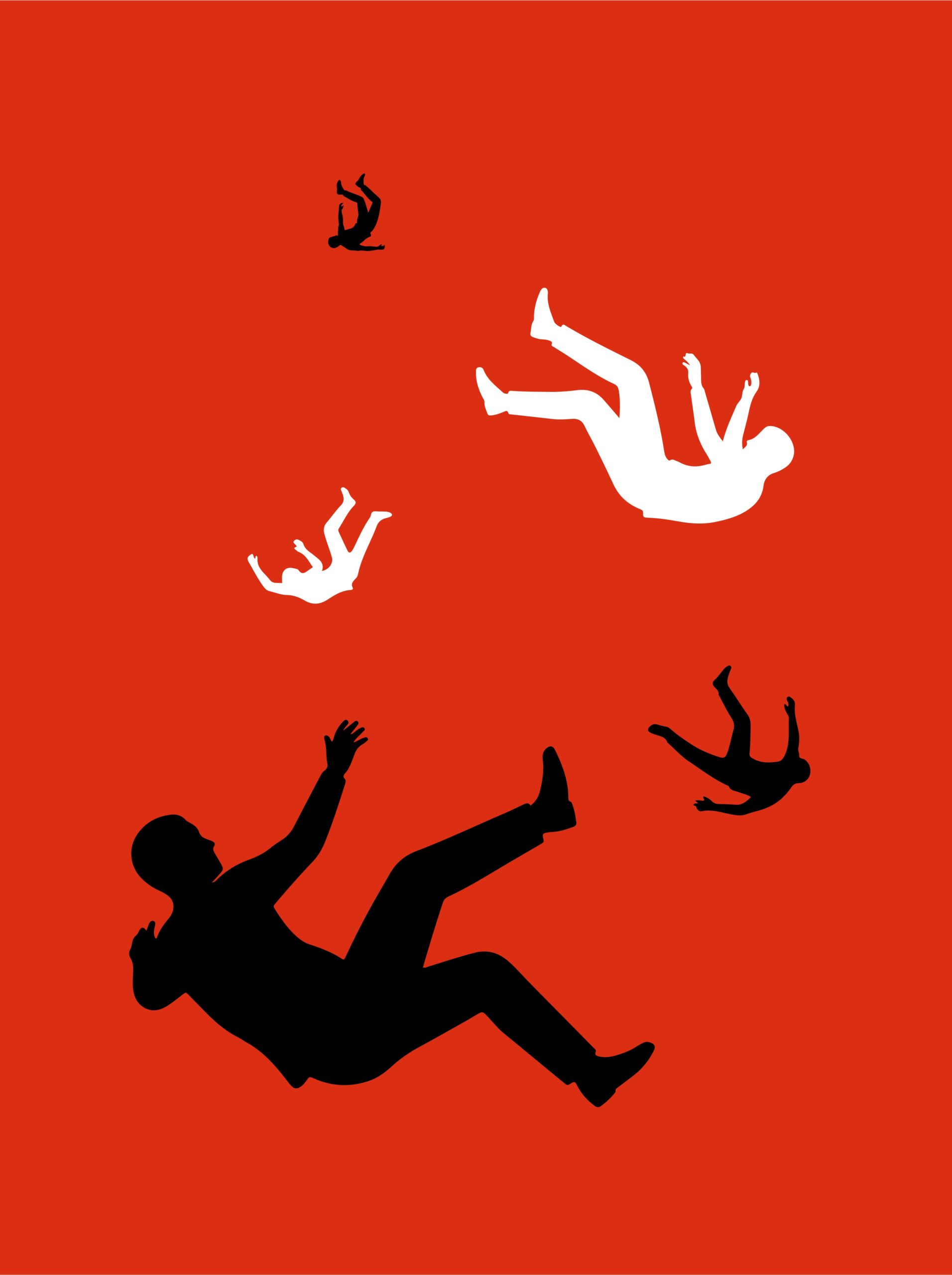
Seven Seconds Without Gravity: Why We’ll Believe Almost Anything
On August 12, 2026, the Earth is supposed to lose gravity for seven seconds. At least, that’s what the internet says.
According to a bizarre theory circulating online, a convergence of astronomical events involving a solar eclipse, a planetary alignment, meteor showers, gravitational waves and black holes will somehow interfere with Earth’s gravity. For seven seconds, the force keeping our feet on the ground will supposedly disappear.
“NASA knows about it”, naturally.
There’s allegedly even a secret program called “Project Anchor.”
None of this is true.
But what fascinates me isn’t simply that someone made it up. People make things up every day. What fascinates me is that someone can assemble a collection of scientific-sounding words, connect them with just enough logic to resemble an explanation, attach a precise date and number to it, and suddenly thousands or millions of people wonder:
Could this actually happen?
That’s worth talking about.
Seven Seconds
Let’s entertain the idea for a moment.
Suppose gravity actually disappeared everywhere on Earth for exactly seven seconds.
Not reduced. Not altered slightly. Gone.
The first problem is that gravity isn’t simply some invisible force underneath our shoes keeping humans from floating away. Earth’s gravity exists because Earth has mass. It acts on literally everything around and within the planet.
So if we are imagining Earth’s gravity literally ‘switching off,’ we aren’t talking about people pleasantly floating around their living rooms like astronauts aboard the International Space Station.
They’re proposing that one of the fundamental interactions governing the physical behavior of our planet has suddenly stopped working.
Oceans are affected by gravity. The atmosphere is affected by gravity. The structure of Earth itself is affected by gravity. Every person, building, vehicle, tree and loose object on the surface exists within this gravitational system.
And Earth is rotating.
This doesn’t mean everyone would instantly be launched vertically into outer space. Objects on Earth’s surface already share Earth’s rotational velocity, so their initial motion would largely continue through inertia. But the moment that you propose eliminating gravity from the equation entirely, you’ve created a problem much larger than floating lawn chairs.
- What happens to the oceans?
- What happens to the atmosphere?
- What happens to the enormous pressures inside the Earth?
- What happens to structures whose loads suddenly disappear and then abruptly return?
And then, seven seconds later:
Here comes gravity, snap back to reality!
Anything displaced now responds to gravity again: Water shifts, Air moves, Objects fall, Structures experience massive and shifting loads; everything that spent seven seconds responding to a different set of physical conditions suddenly has to respond to the old ones again.
The premise quickly stops sounding like a “fun seven-second trip to zero gravity”.
It starts sounding catastrophic.
But there’s an even bigger problem.
Gravity Doesn’t Have an Off Switch
Earth’s gravity isn’t generated because the planet’s core is spinning. It’s not generated because Earth rotates. It’s not even generated because we orbit the Sun.
Earth has gravity because Earth has mass.
The rotation of Earth actually works slightly against your apparent weight, which is one reason you weigh fractionally less at the equator than you would at the poles.
Nor can a planetary alignment switch Earth’s gravity off. The Moon and Sun already exert measurable gravitational influences on Earth. We see some of those effects every day, most obviously in the tides, and this wild science of keeping the earth from spinning out of control, going rogue into the solar system. Even other planets like Venus and Jupiter exert gravitational forces too.
But gravitational forces don’t cancel Earth’s mass out of existence.
A solar eclipse doesn’t change gravity either. An eclipse is primarily a matter of geometry: the Moon passes between Earth and the Sun from our perspective.
Meteor showers aren’t capable of switching off gravity.
And gravitational waves from distant black-hole collisions do not arrive like cosmic electromagnetic pulses capable of temporarily disabling Earth’s gravitational field.
The nearest confirmed black hole currently known is Gaia BH1, about 1,560 light-years away, in the constellation Ophiuchus.
It’s a stellar-mass black hole roughly 10 times the mass of the Sun, orbiting a Sun-like star. Astronomers identified it because Gaia measurements showed that visible star orbiting something massive and invisible.
For perspective, 1,560 light-years is about 14.8 quadrillion kilometers (9.2 quadrillion miles) away. So in terms of the seven-seconds-without-gravity story, Gaia BH1 is most definitely not lurking around the cosmic corner preparing to unplug gravity.
The whole bizarre theory takes real astronomical phenomena and connects them using relationships that don’t exist.
And that is what makes this particular piece of misinformation so interesting.
Specificity Feels Like Evidence
There’s another clever ingredient in the gravity story:
Seven seconds.
Not “a few seconds.” Not “briefly.” Seven seconds. Specific numbers create an illusion of measurement.
If I tell you scientists expect an unusual gravitational disturbance sometime this summer, you might shrug.
But if I tell you that at precisely 14:33 UTC on August 12, Earth’s gravitational field will disappear for exactly seven seconds, suddenly it sounds as though somebody calculated something.
Where did 14:33 come from? Why seven seconds? What instrument measured it? What equation predicted it? Who independently replicated the calculation?
Those are the questions we should ask. Instead, specificity itself often becomes a substitute for evidence. The detail makes the story feel researched even when the detail was invented by the same person who invented the story.
Then Comes the Secret Government Program
Of course, no great internet conspiracy is complete without somebody powerful secretly knowing the truth.
In this case, the rumor invoked an alleged NASA program called “Project Anchor,” supposedly created to prepare for the event.
That’s an extremely effective rhetorical device because it makes the claim partially immune to missing evidence.
The best documented origin I can find is a December 31, 2025 Instagram post from @mr_danya_of. The video claimed:
“On August 12, 2026, the world will lose gravity for 7 seconds. NASA knows.”
Its caption then supplied the elaborate backstory: a secret NASA document called “Project Anchor” had supposedly leaked in November 2024, revealing an $89 billion program, a predicted event at 14:33 UTC, a duration of 7.3 seconds, and an expected death toll of roughly 40 million.
“Why hasn’t NASA announced this?”
Because they’re hiding it, of course.
“Why can’t we find the project?”
Because it’s classified, says every conspiracy theorist
“Why aren’t physicists warning us?”
Because they’re being silenced, by government or aliens no less
“Where is the evidence?”
The evidence was removed, duh.
At that point the absence of evidence has been transformed into evidence. The theory becomes nearly impossible to disprove because every objection can be incorporated into the conspiracy itself. And that’s where healthy skepticism quietly mutates into something else.
Distrusting a government agency is not inherently irrational. Governments have lied. Corporations have lied. Scientists have been wrong. Institutions have covered up misconduct. History gives us plenty of legitimate reasons not to accept every authoritative statement unquestioningly.
But skepticism works in both directions.
If you’re going to demand evidence from NASA, you should demand evidence from the guy on TikTok too.
Otherwise you’re not being skeptical.
You’re simply choosing a different authority.
Why Smart People Believe Stupid Things
This isn’t really about intelligence; human beings are pattern-finding machines. We connect dots because that ability has enormous survival value. We look for causes, relationships, motives and patterns. The problem is that our brains can detect patterns that aren’t actually there.
Then add fear. Add an hint of uncertainty. A dash of distrust. A massive scoop of social reinforcement. Several pinches of an algorithm that discovers you watched one conspiracy video for thirty seconds longer than usual and subsequently feeds you twenty more.
Eventually an idea can begin to feel credible simply because you’ve encountered it repeatedly. Virality is not peer review.
Tomorrow, Gravity Will Still Be Here
The most amusing part of today’s gravity conspiracy is that it comes with an expiration date.
August 12, 2026.
Yes, tomorrow will arrive. Gravity will remain stubbornly operational. The oceans will remain where they belong. People will not rain from the sky.
And somewhere on the internet, I suspect, somebody will explain why the prediction wasn’t actually wrong.
- NASA secretly prevented it.
- The black holes shifted.
- The planetary alignment wasn’t strong enough.
- The calculations were misunderstood.
- The event happened but was imperceptible.
- Or perhaps the date was wrong.
That’s the remarkable durability of a belief built backward from its conclusion: reality can become just another inconvenience requiring explanation.
But maybe seven seconds without gravity gives us a useful lesson anyway; not about astronomy, but about us humans.
We live in an age where virtually the entirety of human knowledge is accessible from a device in our pockets, yet that same device gives misinformation access to virtually the entirety of humanity. We have more information than any civilization in history.
That has not necessarily made us harder to fool. In some ways, it has simply given us infinitely more things to believe.
So the next time someone tells you the planets are aligning, a black hole is sending gravitational waves toward Earth, NASA has activated a secret program and the laws of physics are going offline for seven seconds, don’t immediately believe them. But don’t immediately dismiss them merely because they sound crazy either.
Ask the much more important question:
What would have to be true for this to actually be true?
Then start pulling the thread. Sometimes it leads to an extraordinary discovery.
And sometimes the entire thing falls apart in seven seconds.
Share This Article with Your Network
About the Author: Ryhan Resleff



news via inbox
Want regular updates and new articles from Resonate? Sign up for our free email updates—secure, private, and delivered straight to your inbox.